

Send Us mail
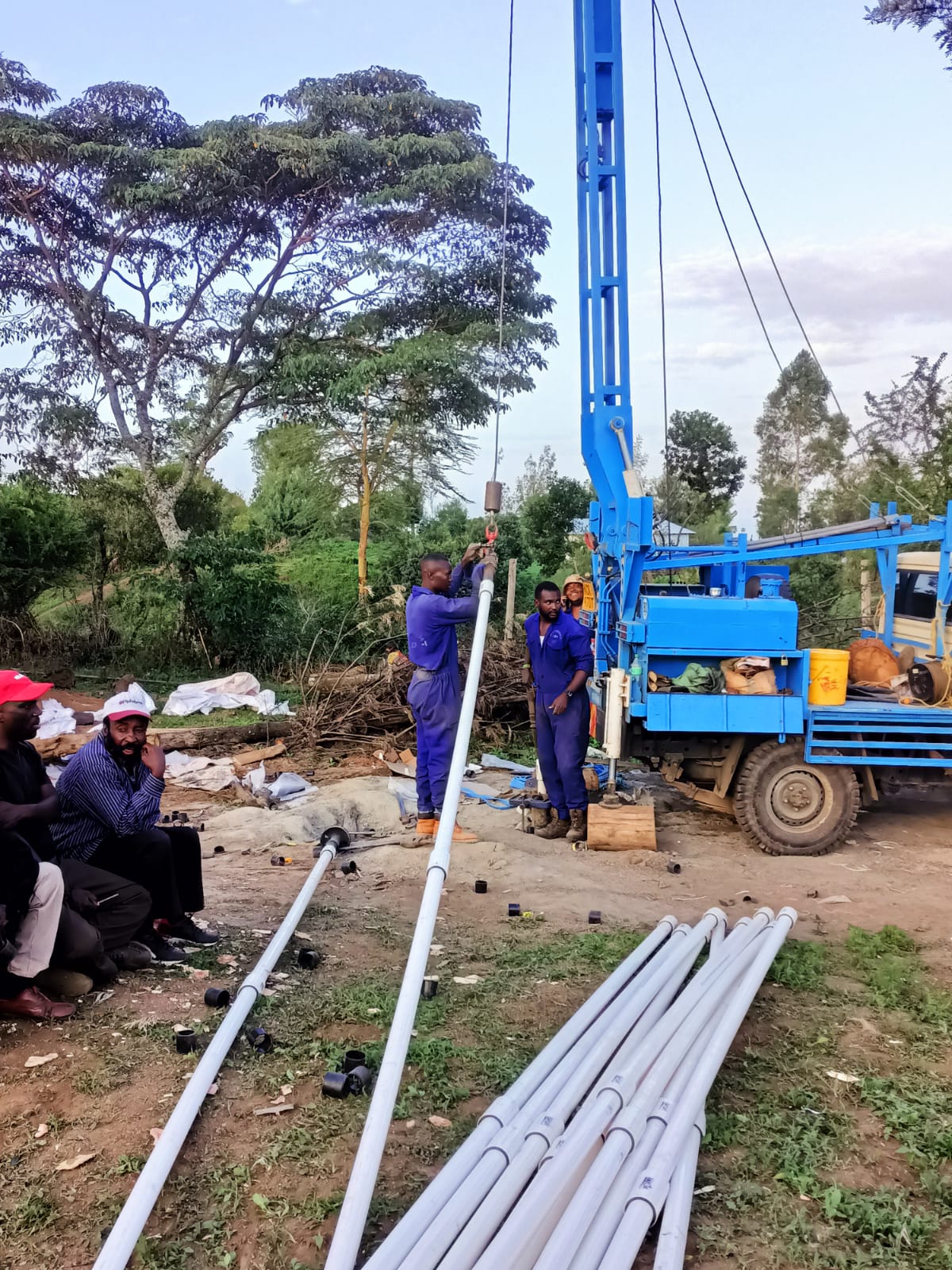
Borehole Drilling in Kenya | Professional Borehole Drilling Services by Pacq Borehole Drillers
Reliable Borehole Drilling and Complete Water Solutions in Kenya
Are you looking for professional borehole drilling in Kenya? Pacq Borehole Drillers provides comprehensive borehole and groundwater development solutions for homes, farms, schools, hospitals, hotels, apartments, commercial properties, industries, institutions and real estate developments.
Access to a reliable water supply is becoming increasingly important for property owners and businesses across Kenya. Whether you need water for domestic use, irrigation, livestock, manufacturing, construction or commercial operations, a professionally planned and developed borehole can provide a dependable long-term water solution.
At Pacq Borehole Drillers, we understand that a successful borehole project starts long before the drilling rig arrives on site. Groundwater conditions vary from one location to another, and factors such as geology, expected drilling depth, aquifer characteristics, water demand and regulatory requirements can affect the design and cost of a project.
Our approach is to help clients move through the borehole development process from initial consultation and hydrogeological assessment to drilling, borehole development, test pumping, water analysis and pump installation.
Our Borehole Drilling Services
Pacq Borehole Drillers provides a range of services designed to support different stages of groundwater development.
Hydrogeological Survey and Borehole Siting
Before drilling begins, it is important to understand the groundwater potential of the area. A hydrogeological survey helps assess geological and groundwater conditions and supports the identification of a suitable location for drilling.
The assessment may consider:
Local geological conditions
Existing groundwater information
Nearby boreholes
Expected aquifer formations
Estimated drilling depth
Groundwater potential
Proposed water demand
Recommended drilling location
A proper assessment can help improve project planning and provide valuable information before major drilling costs are incurred.
Borehole Drilling
Our core service is professional borehole drilling in Kenya for residential, agricultural, commercial and institutional clients.
The drilling method and equipment requirements depend on the geological conditions of the site. Different areas may contain hard rock, volcanic formations, clay, sand, weathered rock or other geological formations that require different drilling approaches.
Our borehole drilling process is planned around the requirements of the specific project rather than using a one-size-fits-all approach.
Borehole Casing and Construction
A borehole requires proper construction to support long-term performance and protect the structure of the well.
Depending on the geological conditions and project design, the borehole may require:
Borehole casing
Screens
Gravel packing where applicable
Sanitary protection
Proper borehole development
Wellhead protection
The final design should be based on the actual geological conditions encountered during drilling and the recommendations of the relevant water-sector professionals.
Borehole Development
After drilling, the borehole may require development to remove fine materials, drilling residues and other sediments and to improve water flow into the borehole.
Borehole development is an important part of preparing the completed borehole for testing and long-term operation.
Test Pumping
Test pumping helps determine the performance of the borehole and provides information that can assist with pump selection and sustainable water abstraction.
For boreholes intended to use motorised pumps, the applicable regulatory framework includes test-pumping requirements. The results can help determine factors such as:
Borehole yield
Pumping water level
Static water level
Drawdown
Recovery
Recommended production rate
Suitable pump capacity
Water Quality Testing
Finding water does not automatically mean that the water is suitable for every intended use. Water quality testing is important in determining the physical, chemical and, where necessary, microbiological characteristics of the water.
Depending on the test requirements, water analysis can help identify issues such as:
Salinity
Iron
Fluoride
Hardness
pH
Total dissolved solids
Bacterial contamination
Other water quality characteristics
The results can help determine whether water treatment may be required for the intended application.
Borehole Pump Installation
Once the borehole has been assessed and tested, Pacq Borehole Drillers can support the installation of a suitable water pumping system.
The right pump depends on several factors, including:
Borehole depth
Static water level
Pumping water level
Required water volume
Borehole yield
Delivery height
Distance to the storage tank
Available power source
We can help clients plan complete borehole pumping systems for domestic, agricultural and commercial applications.
Solar Borehole Pump Systems
Solar pumping can be an effective option for properties seeking to reduce dependence on grid electricity or diesel-powered pumping.
A solar borehole pumping system may include:
Solar panels
Solar pump
Controller or inverter
Pump protection systems
Rising main
Electrical accessories
Water storage tanks
Solar-powered borehole systems can be particularly suitable for farms, rural properties, institutions and locations with limited or unreliable electricity supply.
Borehole Rehabilitation and Maintenance
Existing boreholes can experience reduced performance over time due to sediment accumulation, mechanical problems, pump failure, scaling or other operational issues.
Our borehole-related services can include:
Borehole assessment
Borehole cleaning
Rehabilitation planning
Pump replacement
Pump servicing
Troubleshooting
Water system upgrades
Before undertaking rehabilitation work, it is important to identify the actual cause of the problem.
Borehole Drilling Cost in Kenya
One of the most common questions we receive is:
How much does it cost to drill a borehole in Kenya?
The answer depends on the specific site and project requirements.
There is no single fixed price for every borehole because the total cost can be affected by:
Borehole depth
Geological conditions
Drilling method
Diameter of the borehole
Casing requirements
Distance and mobilisation
Site accessibility
Hydrogeological survey requirements
Regulatory and approval requirements
Test pumping
Water quality analysis
Pump type
Solar or electrical power requirements
Water storage capacity
Plumbing and distribution requirements
For this reason, Pacq Borehole Drillers recommends obtaining a detailed quotation based on the location and requirements of your project.
Indicative Borehole Drilling Prices in Kenya
The following table provides general planning ranges. These figures are indicative and should not be treated as a final quotation.
| Borehole Service | Indicative Price Range |
|---|---|
| Initial consultation | Contact us for assessment |
| Hydrogeological survey | KSh 30,000 – KSh 110,000+ |
| Borehole drilling | Approximately KSh 5,000 – KSh 10,000+ per metre |
| Borehole casing | Depends on diameter, material and depth |
| Borehole development | Project-specific |
| Test pumping | Depends on borehole specifications |
| Water quality analysis | Depends on laboratory parameters |
| Submersible pump | Depends on depth, capacity and brand |
| Solar borehole pumping system | Depends on pump size and solar capacity |
| Water storage system | Depends on tank capacity and installation |
| Complete borehole project | Quotation based on site requirements |
Important Pricing Note
The lowest drilling quote is not always the best value.
When comparing quotations, ask the drilling contractor to clearly explain:
What is included in the price per metre?
Is casing included?
What type and class of casing will be used?
Is mobilisation included?
Is borehole development included?
Is test pumping included?
Is water analysis included?
Are regulatory costs included or separate?
Does the price include VAT where applicable?
What happens if additional drilling depth is required?
Is pump installation included?
Are transport and site-access costs included?
A transparent quotation helps property owners understand the actual scope of work and avoid unexpected costs.
Estimated Borehole Cost by Depth
The table below provides a simplified planning illustration. Actual costs depend on the site.
| Estimated Depth | Example Drilling Cost Range | Typical Application |
|---|---|---|
| Up to 50 metres | KSh 250,000 – KSh 500,000+ | Shallow groundwater conditions |
| 50–100 metres | KSh 300,000 – KSh 1,000,000+ | Residential, farming and small commercial projects |
| 100–150 metres | KSh 500,000 – KSh 1,500,000+ | Residential estates, farms and institutions |
| 150–200 metres | KSh 750,000 – KSh 2,000,000+ | Deep groundwater projects |
| 200 metres and above | Site-specific quotation | Complex or deep aquifer projects |
These figures primarily illustrate how drilling depth can influence project budgets. A complete borehole water system may also include surveys, approvals, casing, development, testing, pumping equipment, power systems, storage and water treatment.
Complete Borehole Water Solutions
At Pacq Borehole Drillers, we believe clients should think beyond simply drilling a hole into the ground.
A successful project should consider the complete water supply system:
Site Assessment → Hydrogeological Survey → Project Planning → Required Authorisations → Borehole Drilling → Casing → Borehole Development → Test Pumping → Water Analysis → Pump Installation → Solar or Electrical Power → Water Storage → Distribution
This approach helps ensure that the borehole is designed around the actual needs of the client.
For example, a homeowner may require a system capable of supplying a household and garden, while a farm may require a higher-volume system for irrigation. A school, hospital or apartment complex may require significantly greater storage, pumping capacity and water treatment.
The right solution should therefore be based on water demand rather than simply installing the largest available pump.
Borehole Drilling for Homes and Residential Properties
A residential borehole can provide an alternative or supplementary water source for:
Private homes
Apartments
Gated communities
Residential estates
Rental properties
Gardens and landscaping
Swimming pool water systems
Domestic water supply
Before installing a residential borehole, it is important to understand the expected daily water demand.
Factors to consider include:
Number of residents
Number of houses or apartments
Bathrooms and plumbing fixtures
Garden irrigation
Swimming pools
Water storage requirements
Existing water supply
Future property development
A properly designed borehole and water storage system can help provide a more reliable water supply for the property.
Borehole Drilling for Farms and Agriculture
Water availability is essential for modern agriculture.
Pacq Borehole Drillers can support groundwater projects for:
Irrigation farms
Greenhouses
Livestock farms
Dairy farms
Poultry farms
Fish farming projects
Flower farms
Horticultural farms
Commercial agriculture
Agricultural projects require careful planning because irrigation can create significant water demand.
Before drilling, the project should consider:
Farm size
Type of crops
Irrigation method
Daily water requirements
Seasonal demand
Water storage
Pump capacity
Available power
Water quality requirements
A solar-powered pumping system can also be considered for farms that have adequate solar resources and suitable project economics.
Commercial and Institutional Borehole Drilling
We also provide solutions suitable for commercial and institutional projects, including:
Schools
Hospitals
Hotels
Churches
Office buildings
Factories
Warehouses
Real estate developments
Apartment complexes
Construction projects
NGOs
Community projects
Commercial properties often have higher and more complex water requirements.
A borehole system may need to support multiple buildings, elevated tanks, pressure systems, treatment equipment or extensive distribution networks.
For this reason, commercial borehole projects should be planned using professional assessments and project-specific engineering considerations.
Why Choose Pacq Borehole Drillers?
Choosing a borehole drilling company is an important decision because a borehole is a long-term infrastructure investment.
Pacq Borehole Drillers focuses on providing clients with a professional and transparent approach to borehole development.
Our Approach
Site-Specific Solutions
Every location is different. We consider the requirements and conditions of each project rather than providing a generic solution.
Complete Water Solutions
We can support the planning of the entire water system, from borehole development to pumping, solar systems and water storage.
Transparent Quotations
We aim to provide clear project scopes so clients understand what is included in their quotation.
Residential, Agricultural and Commercial Services
We work with different types of customers, including homeowners, farmers, developers, institutions and businesses.
Professional Project Coordination
Borehole development can involve several stages and specialists. Proper coordination helps move the project from assessment to completion.
Areas We Serve
Pacq Borehole Drillers provides borehole drilling and water solutions across Kenya, subject to project requirements and operational coverage.
Our services can support projects in:
Nairobi
Kiambu
Machakos
Kajiado
Nakuru
Naivasha
Narok
Nyeri
Murang’a
Meru
Embu
Laikipia
Mombasa
Kilifi
Kwale
Kisumu
Kakamega
Uasin Gishu
Other locations across Kenya
If your location is not listed, contact us with your project details for an assessment of service availability.
Borehole Drilling Process
Step 1: Contact and Initial Consultation
The process starts with information about your project.
We may request details such as:
Borehole location
County and town
Property type
Intended use of water
Estimated water demand
Existing water sources
Site accessibility
Step 2: Hydrogeological Assessment
A hydrogeological assessment may be required to investigate groundwater conditions and support borehole siting and project planning.
Step 3: Project Planning and Required Approvals
The project is planned based on the applicable regulatory requirements and the specifications of the proposed borehole.
Step 4: Mobilisation
The drilling equipment, personnel and required materials are mobilised to the project site.
Site access is important. The drilling rig and support equipment need sufficient access to reach the proposed drilling location.
Step 5: Borehole Drilling
The drilling process begins according to the project design and geological conditions encountered on site.
The drilling team records important information about the formations encountered and groundwater strikes.
Step 6: Borehole Construction and Casing
The borehole is completed using the appropriate casing and other materials based on the geological conditions and design requirements.
Step 7: Borehole Development
The borehole is developed to remove fine materials and improve water flow.
Step 8: Test Pumping
The borehole is tested to determine its performance and assist with the design of the pumping system.
Step 9: Water Quality Testing
Water samples may be analysed to determine whether treatment is required for the intended use.
Step 10: Pump and Water System Installation
A suitable pumping system is installed based on borehole depth, yield, water demand and the required delivery pressure.
The system may be powered by:
Electricity
Solar energy
Hybrid solar and grid power
Other suitable power solutions
Step 11: Water Storage and Distribution
Water can be delivered to storage tanks and distributed to homes, farms, institutions or commercial facilities.
Get a Borehole Drilling Quotation in Kenya
To prepare an accurate quotation, Pacq Borehole Drillers may require the following information:
| Information Required | Why It Is Important |
|---|---|
| Project location | Helps assess mobilisation and local conditions |
| County | Supports location-specific planning |
| Property type | Determines expected water requirements |
| Intended water use | Helps design the system |
| Farm, home or commercial project | Helps determine scale |
| Existing water source | Provides additional project context |
| Estimated water demand | Assists with pump and storage planning |
| Site access information | Helps determine rig access |
| Preferred power source | Supports pump system design |
Providing this information helps us understand your requirements and prepare a more relevant project proposal.
Frequently Asked Questions About Borehole Drilling in Kenya
1. How much does it cost to drill a borehole in Kenya?
The cost of borehole drilling in Kenya depends on factors such as drilling depth, geology, location, drilling method, casing requirements, mobilisation and the additional services required. Indicative drilling rates can vary significantly, often ranging from approximately KSh 5,000 to KSh 10,000 or more per metre depending on project conditions.
A complete borehole system may cost more because it can include hydrogeological surveys, approvals, casing, test pumping, water analysis, pumps, solar systems, storage and distribution.
2. How deep should a borehole be?
There is no standard depth for every borehole. The required depth depends on the geological and groundwater conditions of the specific location. A hydrogeological assessment and information obtained during drilling help determine the appropriate depth.
3. How long does it take to drill a borehole?
The drilling period depends on depth, geology, weather, equipment, site accessibility and project complexity. A complete project may also require additional time for surveys, approvals, testing, pump installation and water system construction.
4. Can you guarantee that a borehole will produce water?
Groundwater development involves geological uncertainty. A professional hydrogeological assessment can provide valuable information and improve planning, but groundwater conditions can vary. The actual results are determined by conditions encountered during drilling and subsequent testing.
5. Do I need a hydrogeological survey before drilling?
A hydrogeological assessment is an important part of planning a borehole project and may also be relevant to regulatory requirements. It helps evaluate groundwater potential and identify suitable locations for drilling.
6. Do I need approval before drilling a borehole in Kenya?
Groundwater development is regulated in Kenya, and borehole projects may require authorisation and compliance with applicable requirements. The exact requirements can depend on the nature and location of the project. Pacq Borehole Drillers can help clients understand the project process and required steps.
7. What is test pumping?
Test pumping is a process used to assess borehole performance. It can provide information about water levels, yield, drawdown and recovery and helps support the selection of a suitable pumping system.
8. How do I choose the right borehole pump?
Pump selection should be based on the borehole’s tested performance, water levels, required water volume, delivery height, pipe distance and power source. Installing an incorrectly sized pump can affect performance and operating costs.
9. Can a borehole run on solar power?
Yes. Solar borehole pumping systems can be used where the project conditions and water demand are suitable. The system design depends on pump capacity, borehole depth, daily pumping requirements and available solar energy.
10. Is borehole water safe for drinking?
Water should be tested before it is assumed to be suitable for drinking. Water quality can vary depending on the geological environment and other factors. Water treatment may be required depending on laboratory results.
11. How long does a borehole last?
A properly designed, constructed and maintained borehole can provide water for many years. The lifespan depends on construction quality, geological conditions, pumping practices, maintenance and the quality of equipment used.
12. Can an existing borehole be repaired?
In many cases, boreholes with reduced performance can be assessed for rehabilitation. The solution depends on the cause of the problem, which may include sediment, pump failure, mechanical issues, scaling or other factors.
Request Your Borehole Drilling Quote Today
Looking for a professional borehole drilling company in Kenya?
Pacq Borehole Drillers is ready to help you plan your next groundwater project.
Whether you need a borehole for a home, apartment, farm, school, hospital, hotel, business, real estate development or commercial project, we can help you explore a complete water solution tailored to your requirements.
Contact Pacq Borehole Drillers Today for:
Borehole drilling
Hydrogeological surveys
Borehole siting
Borehole project planning
Borehole casing and development
Test pumping
Water quality testing
Borehole pump installation
Solar borehole pumping systems
Water storage solutions
Borehole rehabilitation
Complete borehole water solutions
Get Started
Tell us your location, property type and water requirements, and request a site-specific borehole drilling assessment and quotation.
Pacq Borehole Drillers
Professional Borehole Drilling & Complete Water Solutions in Kenya
Call or WhatsApp us today to discuss your borehole project.